Studio notes
Material palettes that work together
Consider texture, light and maintenance before choosing a finish.
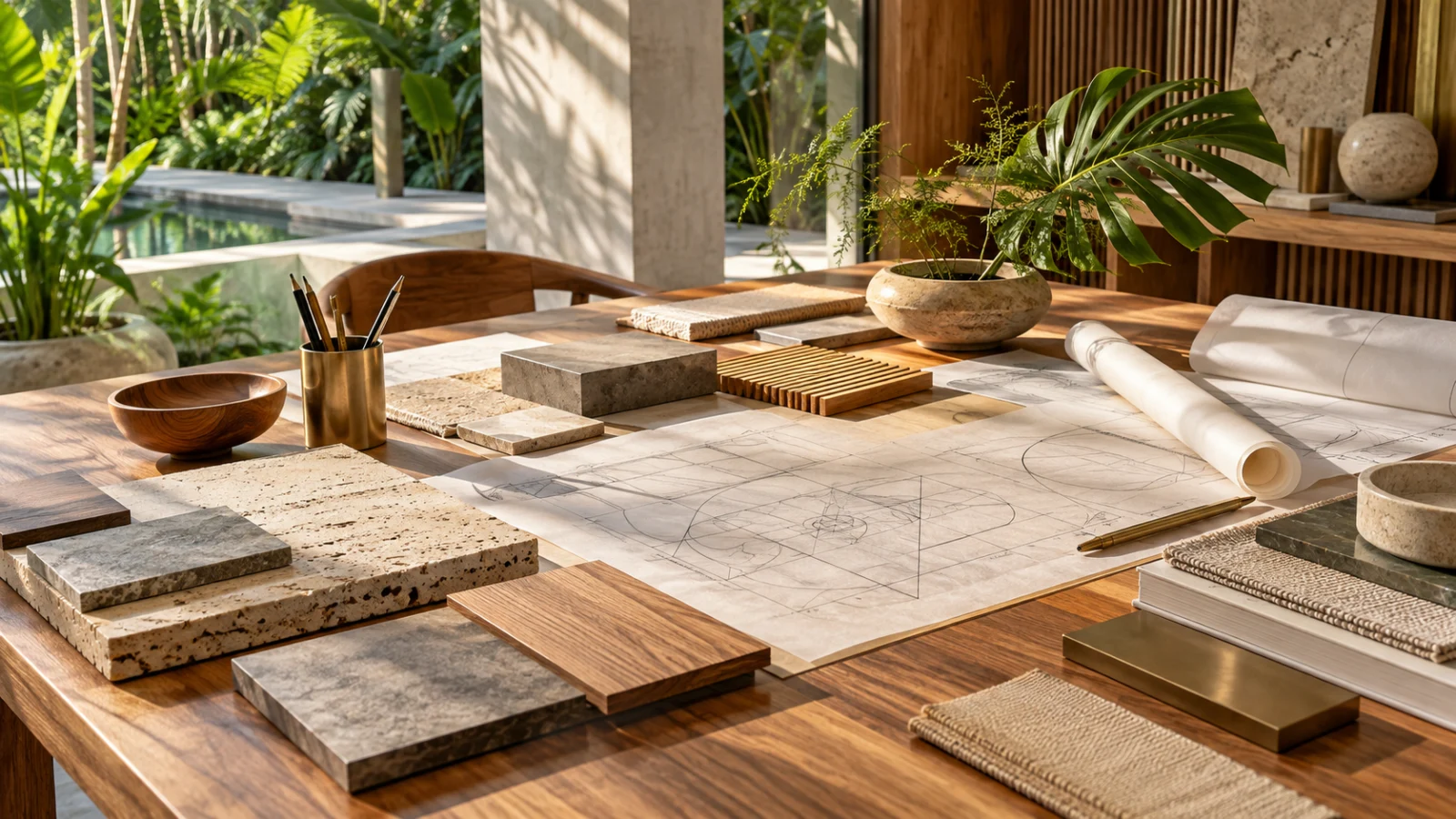
A material palette works through relationships. Compare warm and cool tones, matt and reflective surfaces, and fine and pronounced textures together rather than judging each sample in isolation.
Review samples in the actual light where possible. Daylight and artificial lighting can change how a surface appears. Place adjacent finishes side by side and examine transitions, edges and junctions.
Appearance is only one part of selection. Cleaning, wear, moisture exposure and repair options should suit the intended use. Ask suppliers for technical information and confirm suitability before specifying a product.
A restrained palette can still have depth. Variation in texture and proportion can create interest while allowing the architecture, furniture and daily life to remain legible.